


ADVERTISEMENT
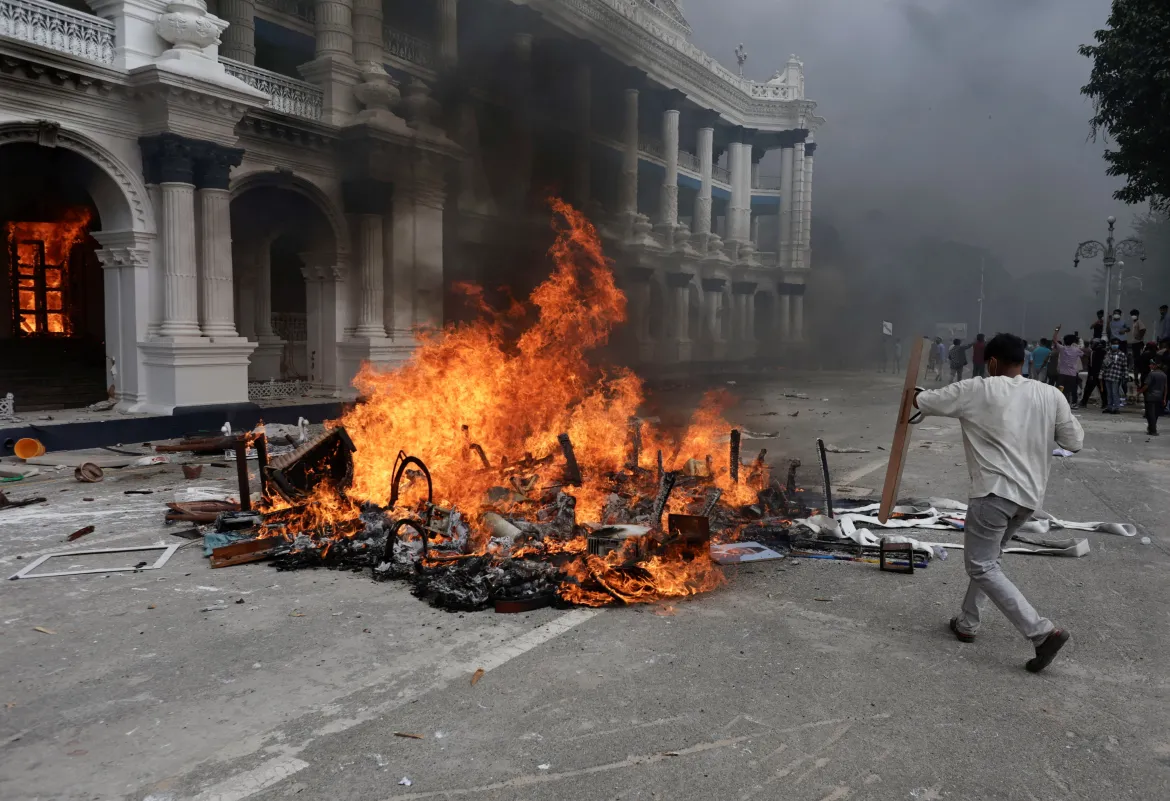
Nepal has plunged into one of the most dramatic crises in its recent history. Within days, the country’s Prime Minister K.P. Sharma Oli was forced to resign amid deadly protests, while enraged demonstrators set fire to parliament, the Supreme Court, and the homes of senior politicians.
The spark came from an unexpected decision: a government ban on social media platforms such as Facebook, X (formerly Twitter), and YouTube. For Nepal’s Gen Z, the ban was an attack on their freedom of expression. What began as frustration with “NepoKids” — children of the elite enjoying privileges — turned into an explosive anti-establishment movement, fueled by anger at corruption and nepotism.
Even after the ban was lifted, the fury did not subside. Violent clashes between protesters and security forces left at least 19–22 people dead. Crowds stormed public buildings, setting fire to government offices and private residences of lawmakers. Oli’s resignation was followed by a wave of ministerial departures, while the army moved in to secure Kathmandu’s airport for emergency evacuations of officials
The Nepali crisis shows how quickly society can erupt when digital freedoms are curtailed. In Poland, where social media plays a vital role in civic debate, it is a reminder that censorship or restrictions could provoke severe backlash, especially among younger generations.
The Nepali crisis shows how quickly society can erupt when digital freedoms are curtailed. In Poland, where social media plays a vital role in civic debate, it is a reminder that censorship or restrictions could provoke severe backlash, especially among younger generations.
ADVERTISEMENT

Related Articles

Trump’s $100,000 Visa Fee: Confusion and Consequences
Trump’s $100,000 Visa Fee Spurs Confusion and Chaos President Trump's announcement of a $100,000 fee for new H-1B visa applications...
Russian Fighter Jets Violate Estonia: Impact on NATO
Russian Fighter Jets Violate Estonian Airspace: Is Russia Trying to Cause Panic in Europe? Russian MiG-31 fighter jets violated Estonian...

What Trump Winning the Election Could Mean for Poland
The possibility of Donald Trump returning to the White House has reignited debates about the potential impact on global geopolitics....

Dude Perfect’s new headquarters will let you do your own trick shots
YouTube superstars Dude Perfect are opening a new $100 million headquarters that will let their fans make amazing shots of...
Despite political issues between their nations, they clean the Polish skyscrapers like no other team
The role that Belarus plays in the present might not be the best for the residents of the country, given...

Music for Ukraine. The Abracadabra band performs around Poland in benefit for Ukrainian families
The rhythm of the most listened music in the world sounds, the main streets of Warsaw fall silent with the...