





Sejm Greenlights SAFE Amendments; Now All Eyes on President Nawrocki
- Significant Vote: The Polish Sejm approved pivotal SAFE law amendments, influencing defense-industrial financing with up to €44 billion in EU funding at stake.
- Enhanced Transparency: New anti-corruption provisions and mandatory reporting obligations were included to improve accountability.
- Domestic Focus: Over 80% of funds are expected to directly benefit Polish defense firms, reinforcing domestic industry capabilities.
- Presidential Approval: The legislation awaits President Karol Nawrocki’s decision, crucial for future implementation.
- Geopolitical Implications: The outcome could redefine Poland’s defense role within Europe amid rising regional threats.
Breakdown of the Sejm Vote and Amendments
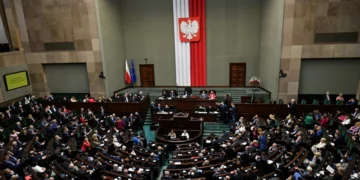
The path to this pivotal moment was paved by a decisive vote in the Sejm in early February 2026, followed by myriad discussions and amendments proposed by the Senate. Four amendments presented by Senator Kazimierz Klejna during a joint session of the Sejm’s National Defense and Finance Committees were accepted, garnering unanimous or near-unanimous support from the committees, including a notable 75-0-4 for the core reporting amendment (Polish Radio, Notes from Poland).
Key aspects of these amendments include:
- Budget Protection: Amendments 1 and 4 ensure that repayments and servicing of loans will come from a dedicated reserve fund, explicitly excluding the budget allocated to the Ministry of National Defense (MON) (Polish Radio).
- Reporting Obligations: Amendment 2 requires the defense minister to regularly report to both the Sejm and Senate committees, thus enhancing transparency and accountability in the SAFE implementation (Polish Radio).
- Anti-Corruption and Counterintelligence Oversight: Amendment 3 integrates provisions for monitoring by Poland’s security services, anti-corruption bodies, and counterintelligence agencies, aiming to mitigate the risks of misuse and foreign interference in defense spending (Polish Radio).
Despite this momentum, opposition figures, particularly from the Law and Justice (PiS) party, raised concerns over national security guarantees, arguing for 12 amendments focused on ensuring that a significant portion of the funds supports the Polish industry (300Polityka). Nevertheless, Prime Minister Donald Tusk defended the bill, claiming that it prioritizes domestic companies and aims to bolster Poland’s defense capabilities (Polish Radio).
Implications for Poland’s Defense-Industrial Financing
The approval of the SAFE amendments leads us into uncharted waters for Poland’s military and industrial landscape. As Tusk stated, more than 80% of the funds will directly benefit the Polish arms industry, focusing on critical areas like anti-drone systems, satellite technologies, and munitions production. This is especially significant given that only 0.37% of funds would indirectly channel to German firms through a Swedish-German partnership (Polish Radio).
Key Areas of Focus:
- Anti-Drone and Munitions: The influx of funds will help scale Polish production capabilities, particularly through firms under the Polski Grupa Zbrojeniowa (PGZ) umbrella, enabling efficient responses against emerging regional threats.
- Satellite Capabilities: Investment will bolster surveillance, communication technology, and situational awareness tools, aligning with the complementary goals of the NIS2 cybersecurity directive approved earlier in 2026 (Chambers Practice Guides).
- Overall Financing: The National Development Bank (BGK) will act as a conduit for up to €44 billion in loans, designed to fund essential industrial expansion without putting immediate strain on the MON budget, given the safeguards around repayments (Notes from Poland).
However, while there are prospects for substantial domestic advantages, there are lingering concerns regarding potential leakages of these funds to foreign suppliers. The opposition fears that without adequate oversight beyond the newly proposed amendments, substantial amounts could siphon off to German and French defense firms (300Polityka).
Next Steps: Presidential Decision Window
The legislation now awaits the approval of President Karol Nawrocki, who has a critical role in shaping its future. He has until mid-March 2026 to either sign the bill, veto it, or refer it to the Constitutional Tribunal for further scrutiny (Notes from Poland). If approved, this will trigger the release of BGK funds to initiate various projects aimed at enhancing the country’s defense capabilities.
While the ruling coalition perceives presidential approval as likely, Nawrocki’s alignment with the opposition could introduce a more thorough vetting process to ensure national interests are adequately safeguarded (Exaudi).
Key Market Risks and Opportunities
| Aspect | Opportunities | Risks |
|---|---|---|
| Financing Access | The €44 billion influx has the potential to significantly accelerate Poland’s defense output, with over 80% anticipated to go to local companies like PGZ and WB Electronics (specializing in anti-drone technologies) (Polish Radio). | Delays resulting from a presidential veto or a Tribunal review might stall project timelines; conditionalities tied to EU rules could affect flexibility (300Polityka). |
| Oversight/Compliance | The enhanced anti-corruption and counterintelligence mechanisms can bolster investor trust, encouraging foreign direct investment (FDI) into secure supply chains (Polish Radio; YouTube). | An increase in reporting obligations may slow down fund disbursements, and managerial penalties (up to 300% of executives’ salaries) could deter effective governance (Chambers Practice Guides). |
| Geopolitical/Market | Polish firms could gain a competitive edge in the EU, especially against German companies, enhancing the export potential for munitions and satellites (Polish Radio). | Claims by opposition regarding funds favoring foreign vendors can undermine market confidence; potential strains on future budgets due to debt servicing can pose long-term risks (Notes from Poland; Exaudi). |
As evidenced by the overwhelming coalition support, immediate risks appear minimal; however, the upcoming presidential decision will be crucial in determining the pace and scope of market growth in the Polish defense industry (Polish Radio; Notes from Poland).
Conclusion
In conclusion, the Sejm’s approval of amendments to the SAFE implementation law opens a new chapter for Poland’s defense infrastructure and industry. The anticipated €44 billion in EU funding, coupled with added layers of transparency and oversight, aims to bolster domestic capabilities while accommodating EU defense objectives. The market awaits President Nawrocki’s decision with bated breath; it could either unleash unprecedented growth opportunities or introduce new hurdles tied to governance and oversight concerns.
With Poland positioned at a crucial geopolitical juncture, the emergence of a robust defense sector supported by strategic investment could reshape its role within Europe and the global defense market. The path forward will undoubtedly be closely monitored by both industry stakeholders and international observers.