

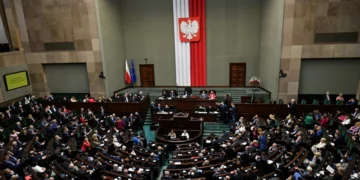


The possibility of Donald Trump returning to the White House has reignited debates about the potential impact on global geopolitics. For Poland, a country that has fostered a strong alliance with the United States, the implications of such an election outcome are complex and multifaceted. From security to energy policy, and from economic ties to regional stability, a second Trump presidency could present both significant opportunities and notable challenges.
Strengthening Security Ties
One of the cornerstones of the U.S.-Poland relationship has been defense and security cooperation. Under Trump’s first presidency, Poland benefited from increased U.S. military presence, with additional troops stationed in the country and enhanced NATO initiatives to bolster Eastern European defenses against potential Russian aggression. Trump’s direct support for Poland’s defense needs, including advanced military equipment sales such as the F-35 fighter jets, underscored the importance of the partnership.
If Trump were to return to power, Poland might expect a continuation or even an expansion of such support, particularly in light of the ongoing war in Ukraine. Poland’s geographical proximity to the conflict and its role as a frontline NATO member have made it a critical player in ensuring European stability. A Trump administration could reinforce Poland’s strategic position with additional military aid and support for modernizing its armed forces.
However, Trump’s past skepticism toward NATO’s collective defense clause, Article 5, which obligates member states to defend each other in case of an attack, could raise concerns in Warsaw. While Poland has historically been proactive in maintaining strong defense capabilities, the country’s reliance on NATO’s security umbrella means any weakening of U.S. commitments to the alliance would create unease. Trump’s transactional approach to alliances might lead to demands for increased financial contributions from European allies, including Poland, to maintain U.S. support.
Economic Implications and Energy Cooperation
Poland’s economic relationship with the United States has deepened in recent years, particularly in the energy sector. During Trump’s presidency, Poland became a key buyer of American liquefied natural gas (LNG), a move that helped the country reduce its dependence on Russian energy imports. Trump’s focus on energy independence aligned with Poland’s strategy to diversify its energy sources, resulting in stronger bilateral cooperation.
A second Trump presidency could see this partnership expand further, especially as Poland continues to invest in LNG infrastructure and renewable energy projects. The United States might also play a role in supporting Poland’s transition away from coal, a challenge that has been a longstanding issue in the country’s energy policy.
On the other hand, Trump’s protectionist trade policies and focus on “America First” could create economic friction. Polish exporters, particularly in industries like automotive parts and IT services, might face challenges if Trump reintroduces tariffs or tightens trade rules. This could strain a relationship that has largely been characterized by economic alignment and mutual benefit.
A Shift in EU Dynamics
Poland’s relationship with the European Union could also be influenced by Trump’s return to the presidency. Trump’s often adversarial stance toward the EU could embolden Poland’s ruling Law and Justice Party (PiS) to pursue more independent policies within the bloc, particularly on contentious issues such as judicial reform, media regulations, and migration. Warsaw might align more closely with Washington on certain matters, positioning itself as a bridge between the U.S. and the EU.
At the same time, this alignment could deepen tensions between Poland and Brussels, as the EU seeks greater unity in the face of geopolitical challenges. Poland would need to navigate a delicate balance, ensuring that its transatlantic ties do not come at the expense of its obligations as an EU member state.
The Ukraine Factor and Regional Stability
Perhaps the most critical aspect of a Trump presidency for Poland is its potential impact on the ongoing war in Ukraine. Poland has been one of Ukraine’s staunchest supporters, providing military aid, welcoming millions of refugees, and advocating for strong Western sanctions against Russia. Trump’s foreign policy approach toward Russia and Ukraine will therefore be closely scrutinized by Polish leaders.
During his first term, Trump’s relationship with Russia was often a point of controversy, and his administration’s initial hesitance to provide lethal aid to Ukraine raised questions about his commitment to countering Russian aggression. If Trump adopts a more conciliatory stance toward Moscow, it could complicate Poland’s efforts to support Ukraine and maintain regional stability.
In such a scenario, Poland might be forced to take on an even larger role in supporting Ukraine, both financially and militarily, potentially straining its resources. Additionally, any perceived softening of U.S. support for Kyiv could embolden Russia, increasing security risks for Poland and its neighbors.
Domestic Politics and Populist Resonance
Trump’s presidency could also have ripple effects on Poland’s domestic political landscape. The Law and Justice Party (PiS), which has drawn inspiration from Trump’s brand of nationalism and conservatism, might find renewed validation for its policies. Trump’s rhetoric on issues like immigration, sovereignty, and traditional values resonates with PiS’s platform, potentially strengthening the party’s position in domestic politics.
However, this alignment could also deepen divisions within Polish society. Opposition groups may push back against closer ties with Trump’s America, particularly if his policies are perceived as undermining democratic norms or EU cohesion. Poland’s political discourse, already polarized, could become even more contentious in the wake of Trump’s victory.
Conclusion
Donald Trump’s potential return to the presidency would undoubtedly have a profound impact on Poland’s foreign and domestic policy. While it could strengthen the U.S.-Poland alliance in areas like security and energy, it might also introduce challenges related to NATO commitments, economic relations, and regional stability. For Poland, navigating these dynamics will require careful diplomacy and strategic decision-making to ensure its interests are protected in an increasingly complex geopolitical landscape.
As Poland watches the U.S. election unfold, the stakes are clear: Trump’s victory would not just shape American policy but also influence Poland’s role on the global stage for years to come.