

Inside Coffeezilla’s Investigation of the Trump Family’s Expanding Business Empire
From meme coins and a secret $500 million investment to Gulf diplomacy, prediction markets and Pentagon-backed technology companies, the YouTube investigator traces a sprawling network of financial interests surrounding the US president. The central question is not simply how much money was made, but what happens when private business ventures overlap with the power of the White House.
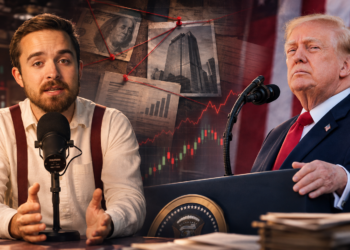
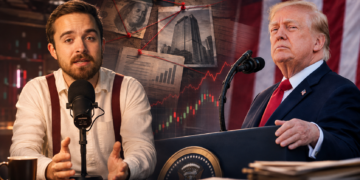
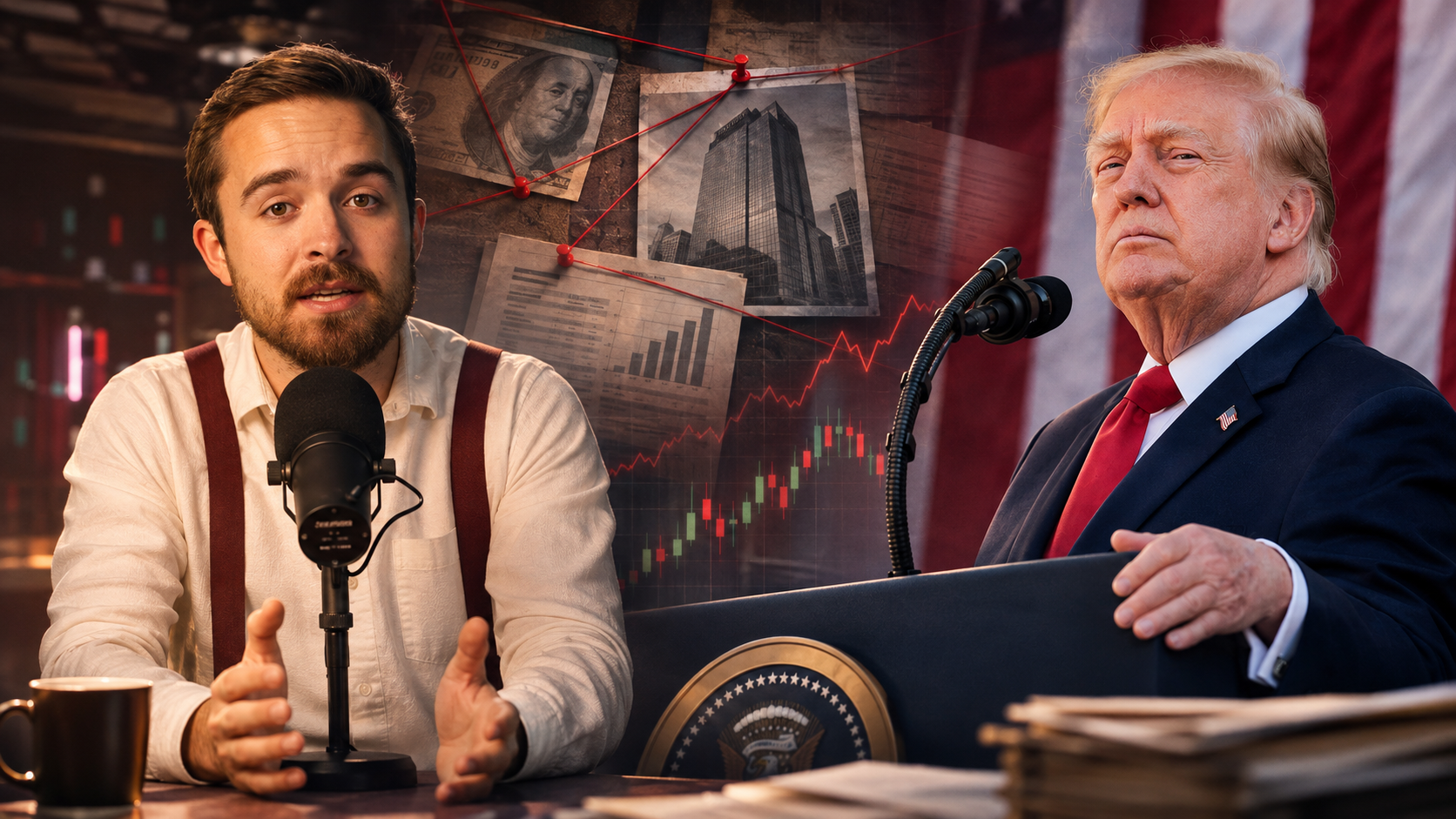
WASHINGTON — November 12, 2026. For years, the internet investigator known as Coffeezilla has built a reputation by following financial trails through cryptocurrency promotions, failed ventures and questionable investment schemes. His work usually concentrates on entrepreneurs, celebrities and online personalities. In a roughly 50-minute investigation, however, he turns to a significantly more powerful subject: President Donald Trump, members of his family and the businesses associated with them.
The video, available on Coffeezilla’s YouTube channel, is not a single exposé of one company. Instead, it attempts to connect transactions and relationships scattered across the digital-asset industry, international investment funds, defense technology, social media, energy and public policy. Its most important contribution is the cumulative picture it draws from developments that have often been reported separately.
Coffeezilla makes serious allegations about conflicts of interest and the appearance of self-dealing. Those allegations should be distinguished from established facts, documented financial transactions and findings of criminal wrongdoing. The investigation does not establish that every transaction it discusses was illegal, that a particular government decision was bought, or that each investor received preferential treatment. The White House, Trump-linked businesses and other parties have rejected suggestions of impropriety in several of the cases examined.
Nevertheless, much of the underlying reporting is not confined to a YouTube video. Important elements have been documented by The Wall Street Journal, ProPublica, Reuters, The Washington Post, WIRED and other news organizations. Taken together, those accounts form the basis of a substantial debate about the separation between presidential authority and private financial gain.
A campaign promise meets a radically different business landscape
Trump’s political identity has long been tied to a promise to confront Washington’s entrenched interests. The slogan “drain the swamp” cast him as an outsider determined to challenge a political class that, in his telling, had become wealthy while ordinary Americans paid the price. Coffeezilla begins by returning to that promise and asking how it should be understood when members of the president’s family are simultaneously expanding investments in industries profoundly affected by federal decisions.
The distinction matters. A president who owns hotels, golf courses or branded consumer products can encounter ethical questions over foreign visitors and commercial partners. A president with financial interests in cryptocurrency, banking, artificial intelligence, national-security technology and energy faces an additional problem: federal laws, export licenses, appointments, enforcement actions and procurement decisions may materially influence the value of those interests.
The investigation also examines why the individual stories can be difficult to follow. Each announcement creates a short burst of attention before another takes its place. Coffeezilla invokes the political communications strategy often described as “flooding the zone”: overwhelming the information environment with so many developments that earlier controversies are displaced rather than resolved. His response was to assemble the deals into a single chronology, working with cryptocurrency researcher and writer Molly White and drawing on reporting by other journalists.
The resulting argument is structural rather than purely personal. Coffeezilla questions whether voters, investors and regulators can properly assess public decisions when those decisions may intersect with a president’s family business. The inquiry starts with one of the simplest and most visible financial products in the story: a digital token bearing Trump’s name.
The $TRUMP launch: a meme coin on the eve of inauguration
On January 17, 2025, just three days before Trump’s second inauguration, an official meme coin called $TRUMP entered the cryptocurrency market. The timing gave the launch unusual prominence. A token tied to the incoming president was being marketed during a historic political transition, when attention, publicity and speculation were already elevated.
A meme coin generally has little connection to a productive business or a stream of future cash flows. Its value is driven principally by demand, visibility and the willingness of other traders to pay more. Supporters may view such tokens as collectibles, expressions of community or speculative assets. Critics argue that celebrity-branded tokens create especially dangerous incentives because promoters can benefit from excitement that ordinary buyers are poorly equipped to evaluate.
In Coffeezilla’s account, the $TRUMP launch became an early warning sign. The token attracted immense attention, its price rose rapidly and late buyers were exposed to severe losses when the market reversed. The investigator cites estimates of roughly $600 million associated with the token’s commercial success. Such figures require care: revenue, licensing income, trading fees, token holdings and paper valuations are different measures, and none should automatically be treated as cash profit personally received by the president.
The losses experienced by ordinary traders are more straightforward. Reporting by The Washington Post found that small and inexperienced token buyers frequently entered near the peak and saw much of their holdings’ value disappear. Coffeezilla and White cite losses from peak prices of approximately 95% for $TRUMP and 99% for the separate $MELANIA token at the point examined in the video. Those percentages describe market performance at a particular time, not permanent or guaranteed outcomes.
Melania Trump’s token and related digital collectibles expanded the story beyond a single launch. The First Family’s identity had become the brand for a series of investable products, while prices for some of those products performed very differently from the sums generated for issuers, partners and early participants. That contrast becomes one of the investigation’s recurring themes.
When holding a token offered a chance to meet the president
Perhaps the most politically sensitive element of the $TRUMP episode was not the initial price movement. It was the subsequent use of presidential access as a promotional incentive. In 2025, the project’s organizers offered places at a private dinner with Trump to the 220 highest-ranking token holders, with further privileges for a smaller group of top investors.
The arrangement tied access to the president to ownership of a financial product benefiting a Trump-associated business. Unlike a conventional political contribution, which operates within a framework of disclosure and campaign-finance rules, a cryptocurrency transaction can be routed through wallets whose ultimate owners are not publicly identified. That distinction made the event difficult to evaluate from the perspective of transparency.
A Guardian analysis of blockchain wallets found that many people who qualified for the dinner had nevertheless lost money on their token trading. Separately, Bloomberg examined the use of foreign cryptocurrency exchanges by leading holders. These patterns suggested that some participants might have been outside the United States, although wallet activity alone cannot conclusively establish a person’s nationality.
Defenders of the event pointed out that private dinners and access to elected officials are not unprecedented, and the White House maintained that the president was complying with applicable conflict-of-interest requirements. Its representatives also argued that the event was separate from official White House business. Critics responded that a direct financial stake in the product being purchased introduces an issue beyond ordinary fundraising.
Coffeezilla uses the episode to pose a question that remains relevant throughout the video: when a financial product becomes a means of seeking proximity to political power, how can the public tell whether participants are investing in a market opportunity, attempting to gain influence or doing both?
Why the investigation turns to World Liberty Financial
The meme coins are highly visible, but the video treats World Liberty Financial as a more consequential company. Established before the 2024 presidential election and closely associated with the Trump and Witkoff families, the venture entered the market with ambitions in decentralized finance, commonly known as DeFi.
The company’s business includes different types of digital assets that should not be confused. WLFI is a token associated with the project’s governance and ecosystem. USD1 is a dollar-linked stablecoin, intended to maintain a value close to one US dollar. The commercial role of the stablecoin is especially important because its issuer or associated entities may earn income from permitted assets held as backing reserves, depending on the arrangements in place.
In the early phase, Coffeezilla and White say, the public profile of World Liberty Financial was unusually dependent on the names attached to it. The project had a prominent political association even before its intended financial services were fully developed. Its token sales accelerated after Trump’s electoral victory, demonstrating how significantly a political outcome could affect appetite for a linked commercial venture.
The video places sales of World Liberty tokens at approximately $550 million during this period. The figure matters less as a standalone headline than as evidence of a powerful commercial narrative: buyers were responding not only to a technical product but also to the fact that it was associated with the family of the incoming president.
This is where the investigation begins to move from retail speculation toward international capital and the question of who was investing alongside the family.
Justin Sun, a $75 million investment and a changing regulatory environment
Among World Liberty Financial’s best-known early investors was cryptocurrency entrepreneur Justin Sun, who committed a reported $75 million to the venture. At the time, Sun and related companies were facing civil litigation brought by the US Securities and Exchange Commission over alleged securities and market-manipulation violations. Sun denied wrongdoing.
The timing drew scrutiny because Sun’s investment brought a major figure with an unresolved federal enforcement matter into a company associated with the incoming president. The SEC subsequently changed its approach to numerous cryptocurrency cases. In March 2026, the matter involving Sun was resolved: the regulator dropped claims against Sun and several related entities, while Rainberry, another company involved in the case, agreed to a $10 million civil penalty without admitting or denying the relevant allegations. The resolution is reflected in the federal court’s judgment.
Coffeezilla considers the sequence troubling. Yet it is crucial to separate the known chronology from a claim about motive. An investment followed by a regulatory settlement is not, by itself, evidence that the investment caused the settlement. The SEC also moved to dismiss cases against other cryptocurrency companies as it reconsidered its regulatory framework, including actions against businesses with no equivalent relationship to World Liberty Financial.
The story did not end with Sun’s initial support. As the video recounts, a later dispute between Sun and World Liberty Financial produced competing public allegations about governance and the treatment of token holders. Both sides contested each other’s account. The dispute illustrates an additional difficulty in the sector: sophisticated investors, project operators and retail buyers may have different rights, incentives and expectations, even when they are associated with the same token ecosystem.
For Coffeezilla, Sun’s involvement is one part of a larger pattern. But the more significant revelation concerns an investor whose role was not publicly understood when one of World Liberty Financial’s most important transactions was announced.
The secret $500 million deal with an Abu Dhabi royal
One of the central revelations discussed in the video originates with a Wall Street Journal investigation published on January 31, 2026. According to the Journal’s reporting, representatives of Sheikh Tahnoon bin Zayed Al Nahyan, a senior member of the United Arab Emirates’ ruling family and the country’s national security adviser, arranged to purchase a 49% stake in World Liberty Financial for $500 million.
The transaction was signed just four days before Trump’s January 20, 2025, inauguration. An entity called Aryam Investment 1 was used in the deal, which the Journal said had not been publicly disclosed at the time. Eric Trump signed the agreement on the World Liberty side, according to the reporting.
The financial distribution is important. Of an initial $250 million payment, the Journal reported that approximately $187 million was directed to Trump family entities and at least $31 million to entities associated with the family of Steve Witkoff, a Trump ally who became a senior US diplomatic envoy. The figures are not simply hypothetical valuations: they describe the reported allocation of an actual initial payment.
Tahnoon is not merely another wealthy investor. He holds a senior national-security role in a foreign state and is connected to technology and investment businesses with significant interests in US policy. The arrangement therefore places a foreign official’s investment in a company benefiting the president’s family alongside high-stakes decisions made by the US government.
In the investigation, Wall Street Journal reporter Sam Kessler explains why secrecy was the most striking element. A transaction of this scale, involving a foreign royal and a business associated with an incoming president, remained outside public view until investigative reporting exposed it. The issue was not just the existence of a foreign investment. It was the public’s inability to assess potential conflicts while other related transactions and policy decisions were unfolding.
World Liberty Financial and representatives of the Trump administration have denied that the arrangement involved improper influence. A substantial business deal can be legitimate, and the identity of an investor does not automatically establish wrongdoing. Nonetheless, the undisclosed financial relationship created a material interest that observers could not take into account at the relevant time.
The $2 billion Binance transaction and the USD1 stablecoin
The hidden ownership relationship became particularly significant when Abu Dhabi investment company MGX announced a $2 billion investment in Binance, the major cryptocurrency exchange. In May 2025, World Liberty Financial co-founder Zach Witkoff said that the transaction would use World Liberty’s USD1 stablecoin.
At first glance, the selection appeared to be a breakthrough for a relatively new digital dollar. A token that had only recently entered the market was being used in a multibillion-dollar institutional transaction. The association with Binance also provided substantial credibility and visibility to World Liberty’s product.
What was not widely understood at the time was the overlap between the financial networks involved. Tahnoon was connected to the investment vehicle holding a substantial stake in World Liberty Financial and also chaired MGX. The Wall Street Journal’s later reporting therefore changed the context in which the USD1 announcement could be understood.
It is important to explain how such a transaction could generate value. A stablecoin generally requires assets to back the outstanding tokens. If $2 billion in stablecoins remain in circulation, reserves of a corresponding value must be maintained under the applicable arrangement. Those assets may include cash and short-term US government securities. Depending on interest rates, operating expenses, custody terms and how proceeds are allocated, substantial reserve income may be available. That is different from saying that $2 billion was handed over as profit to the Trump family.
For illustration, a 4% annual return on $2 billion in reserve assets would equal $80 million before expenses and any revenue-sharing arrangements. Actual income would fluctuate with market conditions and the quantity of tokens outstanding. It is precisely this potential for recurring revenue that makes stablecoin circulation commercially valuable.
Coffeezilla’s investigation argues that the relationship between the investors and the stablecoin issuer should have been visible when USD1 was being presented as an independent market choice. World Liberty Financial rejected the suggestion that the selection was improper. It said MGX chose USD1 on its merits and disputed the idea that ordinary private fundraising should be judged by the disclosure standards critics were demanding. MGX has also publicly defended the stablecoin’s reserve structure and the decision to use it.
The public record supports the existence of the transaction and the overlapping financial interests. It does not, on its own, prove that the choice of settlement currency was a concealed political favor.
Why the UAE’s access to advanced AI chips became part of the story
The United Arab Emirates has sought greater access to powerful US-made artificial-intelligence semiconductors. Such chips are commercially valuable for large data centers but are also closely watched by Washington because of their potential military and intelligence applications and concerns about diversion to rival powers.
The Wall Street Journal reported that the Trump administration subsequently advanced a framework allowing substantial exports of advanced AI chips to the UAE, including allocations connected to Tahnoon’s technology interests. Coffeezilla places that policy development beside the earlier World Liberty investment and asks whether the public can meaningfully scrutinize decisions when the underlying financial relationship was undisclosed.
This is one of the video’s most consequential arguments and one that requires particular precision. An investment in January and a favorable policy decision months later may create the appearance of a conflict. They do not establish that the two events were causally linked or that any government official traded an approval for money. The UAE is a longstanding US partner with substantial independent reasons to seek technology cooperation, and American policymakers have argued that such cooperation can strengthen strategic alliances and domestic technology interests.
The question raised by the investigation is therefore one of institutional confidence. Were the relevant decision-makers insulated from a president’s private financial interests? Were the commercial connections disclosed to the people charged with evaluating export risks? And could the public distinguish a policy decision made in the national interest from one that also financially benefited people connected to the administration?
World Liberty Financial said it has no role in determining US policy and denied allegations of a political exchange of favors. The absence of a proven quid pro quo does not erase the governance questions raised by the structure of the relationships.
Binance, Changpeng Zhao’s pardon and the limits of coincidence
Binance appears repeatedly in the investigation. The exchange received the MGX investment settled using USD1 and became an important venue for trading and promoting World Liberty’s stablecoin. Coffeezilla also points to promotional programs offering unusually high yields to customers holding USD1. Such incentives can accelerate adoption, but they can also make it difficult to determine how much demand exists independently of marketing support.
Then there is the case of Binance founder Changpeng Zhao, widely known as CZ. In 2023, Zhao pleaded guilty to failing to maintain an effective anti-money-laundering program. He served a four-month prison sentence in 2024. On October 23, 2025, Trump granted him a presidential pardon, a decision reported by Reuters.
The White House defended the pardon as a corrective to what it characterized as the previous administration’s excessive campaign against cryptocurrency. Zhao and Binance have denied any exchange of favors in connection with the decision. Trump also said publicly that he did not know Zhao personally.
Coffeezilla connects these developments as part of his broader investigation: Binance participated in a transaction that helped establish USD1, its founder later received a pardon, and the platform supported the stablecoin’s market development. But the correct journalistic description is a sequence of documented events accompanied by allegations of possible conflicts of interest, not a confirmed bribery arrangement.
The case also shows why regulatory context matters. During Trump’s second administration, the SEC softened or withdrew numerous enforcement actions involving cryptocurrency businesses. The SEC has publicly explained some dismissals as part of a shift in legal and regulatory strategy. Critics argue that the shift disproportionately benefited companies with political connections; supporters contend that it corrected an overly aggressive approach that had hampered innovation. Those are competing interpretations of a real policy change.
Regulating a sector in which the president’s family does business
In July 2025, Trump signed the GENIUS Act, creating a federal framework for payment stablecoins. The law addresses the permitted issuance of such tokens, reserves, supervision and safeguards for consumers. The White House described the measure as an effort to make the United States a global leader in digital assets and reinforce the dollar’s international position.
Those public-policy goals are distinct from the question raised by Coffeezilla: the Trump family also stood to benefit commercially from a stablecoin venture. A law designed to legitimize and regulate the industry can affect the business environment in which USD1 competes. The investigation draws attention to the unusual situation in which the administration supported rules for a market that included a product financially linked to the president’s family.
The video also refers to the CLARITY Act, a separate digital-asset market-structure proposal. It should not be confused with the GENIUS Act, which became law. The distinction between enacted legislation, proposals and regulatory decisions matters when assessing what government action actually occurred.
World Liberty Financial also pursued a federally chartered banking operation associated with its stablecoin business. In August 2026, the Office of the Comptroller of the Currency granted preliminary conditional approval for a proposed national trust bank. As The Wall Street Journal reported, the same UAE-linked investment interests remained relevant to the proposed institution’s ownership structure.
The company’s position is that it was treated through the appropriate regulatory process, including review by career personnel, and did not obtain special treatment. Conditional regulatory approval does not by itself demonstrate favoritism. Nevertheless, the overlapping interests mean that the credibility and independence of the review process are central public-interest questions.
Alt5 Sigma: another route between tokens and public markets
Coffeezilla then examines a transaction involving World Liberty Financial and Alt5 Sigma, a publicly traded financial-technology company. The video describes a roughly $1.5 billion deal associated with WLFI tokens and discusses reported financial benefits to entities connected with the Trump and Witkoff families.
The potential conflict outlined by Molly White is more complicated than the straightforward sale of a token. A public company purchasing or holding an asset tied to a business controlled or advised by overlapping insiders may expose shareholders to incentives that are not perfectly aligned. The people benefiting from a token’s adoption may not bear the same risks as those investing in the company that buys it.
In the video’s account, Alt5 Sigma’s shares subsequently lost a substantial amount of value. The investigator cites a decline of roughly 94% over the period he examines and points to a later branding shift toward artificial intelligence. That price movement is relevant to the investor-outcome side of the story, but it is not evidence by itself that the underlying transaction was unlawful.
Corporate reorganizations, token valuations and share-price changes can have multiple causes, including wider market conditions. The more enduring issue is transparency: what did public-market investors know about related parties, compensation, governance and the commercial rationale for holding an asset associated with a politically connected business?
The investigation treats Alt5 as another example of the difference between headline transaction values and the actual results experienced by outside investors.
The Witkoff family and the overlap between diplomacy and commerce
The involvement of the Witkoff family introduces a second layer of political proximity. Steve Witkoff, a longtime Trump associate, became an important US diplomatic envoy. His son Zach plays a leading role at World Liberty Financial. The family therefore appears in both the commercial network around the cryptocurrency venture and the broader context of American relations with Middle Eastern governments.
World Liberty has said that Steve Witkoff divested his interest, an answer intended to address questions about the overlap. But subsequent financial disclosures have continued to attract attention. In September 2026, ABC News reported that Witkoff had disclosed nearly $107 million of income in 2025 from a holding company affiliated with the crypto venture. The disclosure did not necessarily establish that the entire amount came directly from World Liberty, and the timing of income and divestiture matters.
For a government envoy, the standard of scrutiny extends beyond whether a transaction technically complies with the law. Diplomatic negotiations often involve states, sovereign wealth funds, strategic industries and private investors. Clear boundaries are essential if the public is to trust that national policy is being pursued without private commercial incentives distorting it.
Coffeezilla does not establish that Witkoff changed a diplomatic decision for personal gain. Instead, he uses the overlapping roles to demonstrate why the financial relationships of senior advisers and their families have become an important part of the discussion.
Jared Kushner’s investment fund and the Gulf connection
The investigation widens further to Jared Kushner, Trump’s son-in-law and a former senior White House adviser. Kushner founded the investment firm Affinity Partners after the first Trump administration. The firm attracted substantial backing from Middle Eastern investors, including a reported $2 billion commitment from Saudi Arabia’s Public Investment Fund.
Unlike an officially appointed government employee, a private adviser or informal participant in diplomacy may not face exactly the same financial-disclosure, ethics and divestment obligations as an officeholder. That distinction is central to Coffeezilla’s presentation. Kushner has participated in diplomatic activities while remaining associated with a private investment business that maintains relationships in the same region.
The 2026 reporting by Axios described renewed fundraising discussions for Affinity while Kushner was again involved in geopolitical negotiations. It also noted that the firm’s investors and business strategy had long drawn scrutiny.
There are legitimate explanations for such arrangements. Investment funds can raise capital internationally, wealthy countries can invest abroad for commercial reasons, and experienced private citizens can contribute expertise to diplomacy. Kushner has rejected suggestions that his business was a reward for official actions. The ethical concern is whether people involved in negotiations have adequately separated financial incentives from public responsibilities, especially when the counterparties are governments or state-linked funds.
Coffeezilla includes Kushner to show that the issue is broader than cryptocurrency. It concerns the private financial interests of people who operate close to the center of American foreign policy without always occupying conventional government roles.
Qatar’s proposed aircraft gift, arms sales and business deals
Qatar provides another example of how the investigation groups separate developments to examine possible conflicts. In 2025, a proposal emerged for Qatar to provide a luxury Boeing aircraft, widely valued at around $400 million, for use by the US government as a presidential plane. The contemplated arrangement raised questions over constitutional restrictions on foreign gifts and what would happen to the aircraft after Trump’s presidency.
As FactCheck.org explained, the distinction between a gift to the federal government and a personal gift to the president is legally significant. The proposed aircraft should not be described simply as a $400 million personal payment to Trump. The legal controversy concerned the structure of the transfer, congressional authority and the potential later destination of the plane.
At roughly the same time, Qatar and the United States were engaged in substantial defense and economic negotiations, while Trump-branded business projects in the country attracted further attention. Coffeezilla cites arms transactions and a major luxury development that included a golf course carrying the Trump name.
Such transactions can have valid and independent explanations: military cooperation with Qatar predates Trump’s second term, and large commercial developments frequently involve multiple private partners. The investigation’s concern is that the combination of state-to-state negotiations, proposed gifts and the family’s private business makes it more difficult for outsiders to assess the boundaries separating national interests and commercial incentives.
As with the UAE example, parallel events and suggestive timing are reasons for scrutiny, not proof that a particular arms sale was approved in exchange for a commercial advantage.
American Bitcoin: the Trump name enters crypto mining
The investigation then follows Eric Trump and Donald Trump Jr. into another part of the digital-asset economy: Bitcoin mining and treasury management. Their involvement in American Bitcoin illustrates how political brand recognition can be presented as a commercial asset even where an existing company supplies much of the underlying technology and infrastructure.
In March 2025, energy and cryptocurrency company Hut 8 contributed most of its owned mining machines to a business that became American Bitcoin. In return, Hut 8 received an 80% equity interest. The structure is described in an SEC filing. The transaction gave the new business industrial infrastructure, while the Trump family connection offered access to capital networks and public attention.
In an interview with WIRED, American Bitcoin’s chief executive described the Trump brothers as bringing capital-market connections and the narrative attached to their surname. Those are commercially recognizable benefits. Investors often value founders with strong networks, prominent advisers and the ability to attract publicity.
Coffeezilla argues that the calculus becomes more politically delicate when the same administration is promoting Bitcoin and establishing a strategic Bitcoin reserve. Such policies may influence industry sentiment and the commercial environment for firms accumulating or mining Bitcoin. The alignment is a potential conflict worth examining, but it should not be confused with evidence that American Bitcoin was guaranteed government contracts or a positive investment return.
The broader pattern is the diversification of Trump-linked businesses into sectors whose prospects depend partly on decisions made in Washington.
Trump Media: from a social platform to a wider financial ecosystem
Trump Media & Technology Group, commonly known by its stock ticker DJT, sits at another important junction. The company operates Truth Social, a platform on which the president communicates directly with supporters and publishes statements that can affect financial markets. It has also pursued streaming, investment products, cryptocurrency-related partnerships and other businesses.
One development receives particular attention in the video: the company’s decision to sell institutional clients rapid access to Truth Social posts through a paid data service. In July 2026, Reuters reported that access was being pitched at prices as high as $100,000 a month, with discounted arrangements for longer commitments. The product was designed for professional customers such as trading firms that value fast delivery of potentially market-moving information.
The significance is not merely technological. A presidential statement can influence expectations about tariffs, regulation, government contracts or particular industries. If a company financially linked to the president sells a fast channel for receiving that information, critics ask whether public communications are becoming a commercial product from which private interests benefit.
The counterargument is that data feeds, application programming interfaces and real-time information services are established businesses. Companies routinely charge for low-latency access, and a paid feed does not automatically mean that subscribers receive secret policy decisions. The ethics issue turns on the relationship between the person generating official market-sensitive information and the business monetizing its distribution.
The video also discusses Trump Media’s cryptocurrency treasury strategy, branded investment funds and relationships with other digital-asset companies. Some of the company’s stock-market performance and financial results have disappointed investors. Those financial outcomes matter because they highlight a recurring distinction between the commercial opportunity created for business sponsors and the risks ultimately borne by shareholders.
Fusion energy and the reach of regulatory power
Among the more surprising developments is Trump Media’s proposed combination with fusion-energy business TAE Technologies. The companies announced an all-stock merger valued at more than $6 billion, moving a firm best known for a political social-media platform toward a capital-intensive energy technology that has yet to become commercially mature at utility scale.
Fusion is an area in which capital, scientific progress, permits, power infrastructure and government policy all matter. Commercial success is uncertain and can be many years away. That uncertainty is precisely why Coffeezilla considers the proposed combination relevant: a president-linked company would be taking a substantial position in another industry where federal policy may shape investment conditions.
The proposed merger should not be described as completed. On November 5, 2026, TAE announced that the related SEC registration statement had become effective, but the transaction remained subject to shareholder votes and other closing conditions.
There is a plausible business explanation for combining access to public capital with a company developing new energy technology. There is also an obvious question about conflicts when the government sets policy affecting research, infrastructure development and the supply of power to AI data centers. The investigation presents these concerns as further evidence of the expanding intersection between private interests and public responsibilities.
Prediction markets: Donald Trump Jr. and two competing platforms
Prediction markets allow participants to trade contracts linked to the outcomes of events, ranging from elections to economic indicators and sports. Their rapid growth has triggered regulatory disputes about whether particular contracts should be treated as financial derivatives, gambling products or a combination of the two. The Commodity Futures Trading Commission plays a central role in that debate.
Coffeezilla highlights Donald Trump Jr.’s connections to two prominent companies in the field. Kalshi announced him as a strategic adviser in January 2025. Months later, Axios reported that 1789 Capital, the venture capital firm where Trump Jr. is a partner, had invested in rival Polymarket and that he would join its advisory board.
These are distinct relationships, not evidence that he owns or directs both businesses in the same way. They nevertheless mean that a member of the president’s family has commercial ties to competing companies in a sector whose prospects are being shaped by regulatory and political decisions.
The investigator plays interviews and congressional testimony in which officials and executives defend the integrity of the regulatory process. The relevant agencies have insisted that decisions are made according to the law rather than political favoritism. Companies have described Trump Jr.’s involvement in terms of business development, advice and support for an emerging industry.
Critics view the arrangement differently. They ask why a politician’s son is so commercially attractive to two competitors at the same moment that the legal boundaries of their industry are contested. A political connection may provide networks and knowledge without involving any improper intervention. But the possibility that executives value perceived access to power makes transparency about advisers, compensation and lobbying activity especially important.
1789 Capital, Vulcan Elements and a Pentagon decision
One of the most concrete cases in the video involves 1789 Capital and a company called Vulcan Elements, which makes rare-earth magnets used in advanced manufacturing and defense technology. Trump Jr.’s investment firm acquired a stake in Vulcan before the US government announced plans for a very large financing package for the business.
The broader policy rationale is real. The United States has sought to reduce reliance on foreign suppliers, particularly China, for critical minerals and components used in military and industrial systems. Financing domestic production can therefore serve an identifiable national-security goal.
What makes the Vulcan case different is the independent reporting about how the funding was advanced. In a May 28, 2026 investigation, ProPublica reported that White House adviser Peter Navarro requested action on a proposed $620 million Pentagon loan to Vulcan. According to sources and records cited by the publication, the request accelerated consideration of the company, and Vulcan was the only deal among those examined that had been initiated by a top White House aide.
The reported intervention occurred after 1789 Capital had invested in Vulcan. The size of the government’s contemplated support also attracted attention because it represented an enormous expansion in financial resources available to a relatively young startup. For existing investors, government-backed funding could make the value of their stake more attractive, although the eventual return would remain dependent on business performance.
The denials are essential to the story. A spokesperson for Trump Jr. told ProPublica that he had not spoken to Navarro about Vulcan and did not know how the deal came together. Representatives of 1789 Capital said the firm did not play a role in obtaining the funding. The Pentagon said political connections did not influence its decisions, and the White House defended the administration’s work to strengthen critical mineral supply chains.
These responses leave an important distinction. ProPublica documented an intervention by a presidential adviser in the funding process. Its reporting did not establish that Trump Jr. ordered the intervention, coordinated it or knew about it. Coffeezilla uses the case to challenge broad claims that political proximity plays no role in the investment environment, not to demonstrate a proven criminal conspiracy.
A SPAC focused on businesses that benefit from government programs
The video also examines a special-purpose acquisition company, or SPAC, called New America Acquisition I, associated with advisers including Donald Trump Jr. and Eric Trump. A SPAC raises capital first and then seeks a business to acquire or combine with, giving investors exposure to a future transaction whose details may initially be uncertain.
Coffeezilla focuses on language in the company’s securities filings describing the kinds of businesses it wanted to pursue. The presentation discussed companies positioned to benefit from government incentives, defense priorities, procurement opportunities and economic-security policy. The investigator questions the combination of that investment thesis with a roster of advisers related to the president.
There is nothing inherently illegitimate about pursuing companies in sectors supported by government spending. Defense manufacturing, energy and supply-chain resilience have been investment themes for years, across administrations from both parties. The relevant question is what advantage the advisers are expected to provide and whether their compensation, interactions with officials and any requests for government support are fully transparent.
Coffeezilla notes that wording related to preferential procurement was later changed. Changes in disclosure language do not prove wrongdoing, but they illustrate the sensitivity of describing political or administrative access as a commercial advantage.
Robots, military technology and Eric Trump’s advisory role
Another company in the investigation is Foundation Future Industries, a startup developing humanoid robots with potential industrial and military uses. Eric Trump became an investor and strategic adviser to the business, bringing the family name into another industry heavily influenced by defense contracts and government research spending.
Public discussion of the company included claims about approximately $24 million in Pentagon-linked work. The investigator highlights the uncomfortable appearance of a president’s son advising a business seeking to supply the military. But he also cites an important qualification from WIRED’s reporting: some contracts promoted as evidence of recent government success had been inherited through acquisitions or partner arrangements rather than won directly by the new company after Eric Trump joined.
That distinction prevents a simplistic claim that the company secured all of its federal business solely because of the Trump connection. Military robotics is an emerging sector with genuine procurement demand, and commercial interest can exist independently of political relationships. At the same time, advising and investing in a contractor creates an understandable expectation of heightened scrutiny when family members occupy the nation’s highest offices.
Eric Trump has said his interest in robotics reflects a belief in American technological leadership and competition with China. Coffeezilla notes that this rationale appears frequently across the family’s newer investments, from cryptocurrency and Bitcoin to rare-earth minerals and advanced manufacturing. The argument may describe genuine strategic priorities; it does not alone resolve the question of whether private and public interests are sufficiently separated.
The recurring divide between insiders’ gains and outside investors’ results
The investigation repeatedly returns to an uncomfortable difference between the people who launch, license, promote or take ownership stakes in a business and the retail investors who buy its products or shares. In several ventures discussed, substantial revenue or headline valuations were reported while publicly traded securities or tokens later lost much of their value.
These are different financial experiences. Founders may receive cash from a token sale, licensing agreement or equity transaction even if the token subsequently declines. An issuer of a stablecoin may earn reserve-related revenue without investors obtaining a comparable return. Venture investors can acquire private stakes at terms unavailable to the public. Meanwhile, shareholders who purchase after a high-profile announcement may be exposed to falling prices, dilution, operational losses and long waits for a business plan to mature.
Coffeezilla cites very large estimates for the expansion of Trump-linked wealth, including figures drawn from financial disclosures and publications such as Forbes. Such calculations depend heavily on what is being measured. A private-company valuation, a token’s theoretical market capitalization, reported income, realized proceeds and net personal wealth should never be added together as though they were identical. The video’s broad point does not require every valuation estimate to be exact: the family’s corporate interests have expanded notably into areas sensitive to decisions made by the federal government.
Nor does a disappointing investment establish fraud. Stocks decline for many reasons, and speculative tokens can lose value without a criminal act. The issue raised by the investigation is whether retail buyers fully understood the incentives of the issuers and politically connected insiders whose endorsements helped generate demand.
What the White House and the companies say
The documentary’s most serious implications have been contested. White House representatives have repeatedly argued that Trump complies with applicable ethics and conflict-of-interest requirements, that his businesses are managed separately from official responsibilities and that policy decisions are made for national and economic interests. Administration officials have defended a more permissive approach to cryptocurrency regulation as a deliberate pro-innovation policy rather than a reward for politically connected investors.
World Liberty Financial has denied that its investors can buy influence over US policy. It has defended the commercial rationale for the MGX transaction, the use of USD1 and the independence of regulatory reviews involving its banking plans. Binance and Changpeng Zhao have rejected claims of an improper bargain surrounding Zhao’s pardon. Representatives of Donald Trump Jr., 1789 Capital and the Pentagon have disputed suggestions that political favoritism explains Vulcan Elements’ funding.
Coffeezilla says he sought comment from Donald Trump, Donald Trump Jr., Eric Trump and Melania Trump for the video, without receiving replies from them. The investigator also describes receiving a legal warning before publication. Those statements are part of his account of the reporting process; they should not be understood as evidence that the recipients accepted the video’s allegations.
The lack of a response to a media inquiry is not proof of misconduct. Equally, a denial does not settle the underlying questions about ownership, timing, influence and official decision-making. Those questions require documents, independent review and a clear distinction between lawful commercial activity and misuse of public office.
What Coffeezilla’s investigation establishes — and what it does not
The video is strongest when it brings together independently documented transactions that are difficult to understand in isolation. The reported secret $500 million UAE-linked purchase of a major World Liberty stake is one example. The choice of USD1 in a $2 billion Binance investment, the pardon of Changpeng Zhao and the regulatory transformation of the cryptocurrency industry are others. In a separate sector, ProPublica’s reporting on White House involvement in a proposed Vulcan Elements loan supplies a concrete account of how government support was advanced.
These events do not all have the same evidentiary weight. Some are documented through corporate filings, legal orders or public announcements. Some are findings reported by investigative journalists who reviewed records and interviewed sources. Others are Coffeezilla’s interpretations of financial relationships, timing and incentives. Responsible coverage must identify which is which.
The investigation does not show that every company connected to the Trump family received a favor, that every government policy was altered to benefit relatives, or that the existence of an investment proves a criminal offense. Nor should all industries be treated as interchangeable. Cryptocurrency regulation, export licensing, defense procurement and foreign diplomacy have different rules and different public-interest considerations.
What the material does show is a growing need for transparency around circumstances in which politically connected people hold significant business interests. Even lawful arrangements can erode public confidence if ownership structures are hidden, advisers’ compensation is opaque or regulators cannot demonstrate their independence.
There is also a question of precedent. A practice accepted for one president can become a model for later administrations of either political party. Ethics rules and disclosure expectations are designed not merely to respond after wrongdoing is proved, but to reduce situations in which the public must guess whether an official decision was made for private gain.
The larger question: who benefits when political power and business intersect?
Coffeezilla’s investigation ends by returning to the contrast that opened the video. Trump rose to power promising to confront self-enrichment in Washington. During his second presidency, the business activity of people around him has expanded into a range of sectors with direct exposure to federal policy. Some developments have been publicly announced and defended as legitimate commerce. Others became known only through investigations by journalists.
No single transaction tells the whole story. The meme coins show the power of political branding in a speculative market. World Liberty Financial shows how that brand can be embedded in digital financial infrastructure. The UAE investment and the MGX-Binance transaction demonstrate the importance of understanding who is financially connected behind the scenes. Kushner’s and Witkoff’s relationships raise questions about private wealth and diplomacy. Trump Media, prediction markets, mining businesses and technology contractors extend the same debate into additional industries.
For investors, the essential lesson is to distinguish a famous name from an investment’s underlying value. For regulators, it is to preserve credible and transparent decision-making even when a regulated business has powerful owners or advisers. For the public, the central issue is whether the people exercising government authority can convincingly show that those decisions serve the country rather than their families’ commercial interests.
The investigation’s significance is not that a YouTuber has delivered a criminal verdict. He has not. It is that he has assembled a broad and documented set of relationships that, taken together, demand answers. Whether those answers ultimately come from corporate disclosures, oversight investigations, regulators or the people involved, the burden of maintaining trust in public institutions remains.
Sources and further reading
Primary investigation: Coffeezilla’s video investigation, discussed in this article using its transcript.
Independent reporting and records: The Wall Street Journal on the UAE-linked World Liberty stake; ProPublica on Vulcan Elements and the White House; The Washington Post on retail meme-coin losses; the GENIUS Act; Hut 8’s SEC filing on American Bitcoin; Axios on Polymarket and Trump Jr.; WIRED on Foundation Future Industries; and TAE’s November 2026 merger update.
Editorial note: This article is a journalistic account and analysis of Coffeezilla’s investigation, supplemented by public reporting and records. It is not a finding of criminal liability. Statements about disputed conduct are attributed to their sources, and the denials of parties involved are included. Financial figures and securities performance cited from the video reflect the periods examined and may change.