





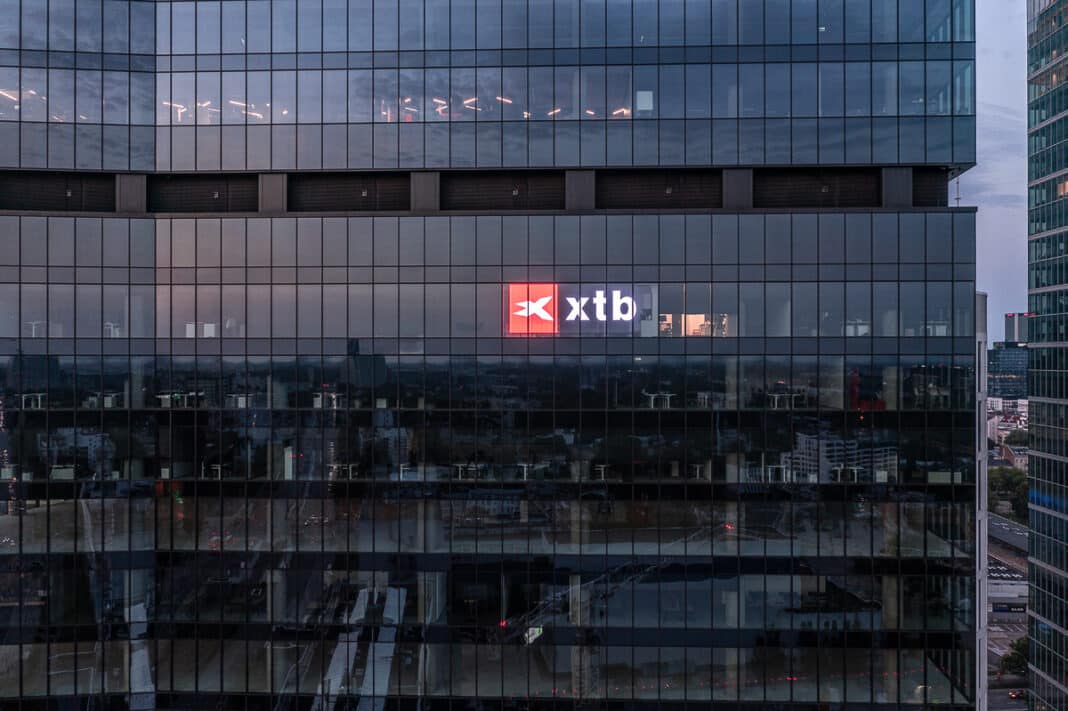
Shares in XTB dropped sharply on Tuesday after Poland’s financial regulator said it was preparing another intervention in the market for contracts for difference, or CFDs. The statement was brief, the details were not published and investors were left trying to work out what it could mean for one of the country’s largest online brokers.
During the Parkiet ExChange conference, KNF deputy chair Dariusz Adamski said the authority intended to act again on CFDs, citing the scale of retail investors’ losses. The regulator said that 267,000 investors lost money on CFDs in 2025, with total losses close to PLN 2 billion.
The comments sent XTB shares down about 17.5% by the close, after an intraday fall of roughly 19%, according to market reports. No draft regulation, timetable or proposed restrictions were released alongside the announcement.
What is known so far
KNF’s remarks concerned the Polish CFD market as a whole. They were not a new enforcement decision against XTB, and they did not amount to a ban on CFDs. That distinction was important, but it did not answer the main question for investors: what form the intervention might take.
Possible measures could range from stricter marketing rules and suitability checks to changes in how the products are offered to retail clients. Until KNF publishes a proposal, it is not possible to put a reliable figure on the effect for XTB or other brokers.
Why XTB investors reacted
CFDs are an important part of XTB’s business, so even a broad regulatory warning can affect expectations about future revenue. The company was already under close scrutiny after KNF upheld a PLN 20 million penalty in August over past shortcomings linked to CFD offering, including target-market assessment and risk information. That case is separate from Tuesday’s announcement.
The speed of the sell-off reflected the lack of detail as much as the prospect of tighter rules. Investors were asked to assess a wide range of scenarios during the trading session, from limited consumer-protection changes to more significant restrictions.
A question about market communication
There is a clear public-interest case for examining high-risk products. CFDs use leverage and losses can mount quickly. KNF is entitled to signal that it sees a problem. But when a statement is likely to move the share price of a listed company, the way it is communicated matters too.
In this case, the market received a warning without the document that would explain its scope, timing or likely impact. Later reports made clear that the remarks covered the broader CFD market and that no detailed plan had yet been published. That helped narrow the interpretation, but it did not remove the uncertainty that drove trading earlier in the day.
The next step is now with KNF. A published proposal and consultation timetable would give investors, clients and brokers something more concrete to assess. Until then, the key fact remains that tighter CFD rules have been signalled, while their practical consequences are still unknown.
This article is for information only and is not investment advice.
Sources: Bankier.pl, KNF, XYZ.